What to see?
The best attractions Lake Como has to offer
Explore the timeless beauty of Lake Como, from its historic villas to its breathtaking landscapes.
Como
Como sits at the tip of Lake Como’s western branch and blends a compact medieval center with elegant lakeside promenades and historic villas. From the Cathedral and the old Broletto to the lakeside walkway and boat piers, it is the natural gateway for exploring the lake’s most iconic towns and villas.
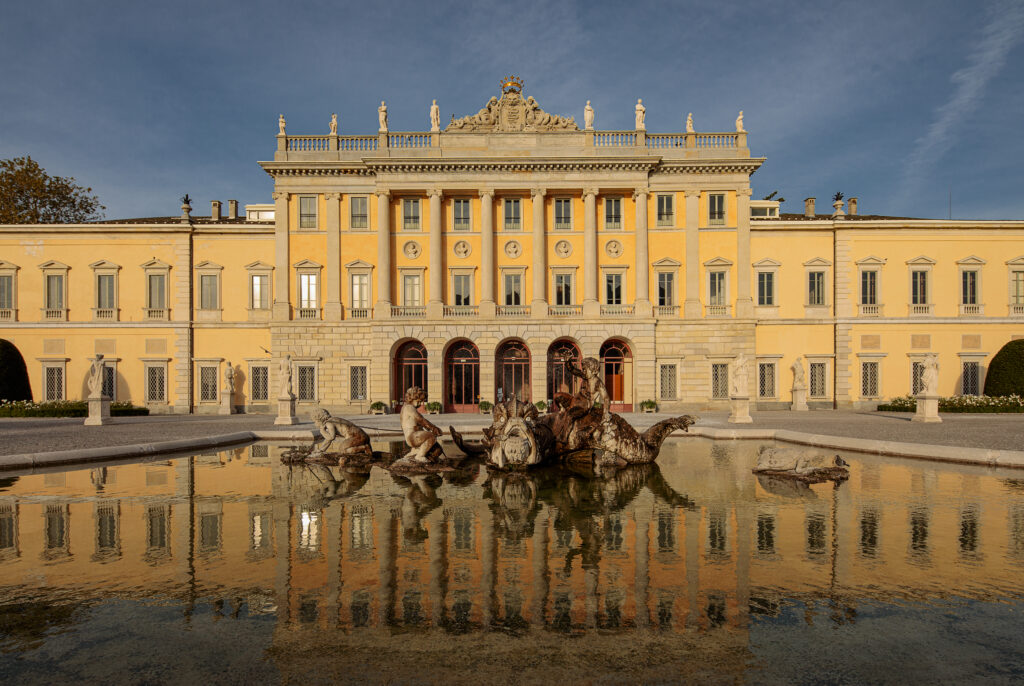
Villa Olmo
Villa Olmo is one of Como’s most celebrated neoclassical villas, standing directly on the waterfront and framed by a formal lakeside park and tree‑lined avenues. Built in the late 18th century for the Odescalchi family, it later welcomed illustrious guests such as Napoleon, Foscolo and Garibaldi, turning into a true symbol of aristocratic leisure on the Lario. Today its grand halls host exhibitions and cultural events, while the gardens with statues, terraces and a curving fountain open onto one of the most elegant panoramas of the Como shoreline.
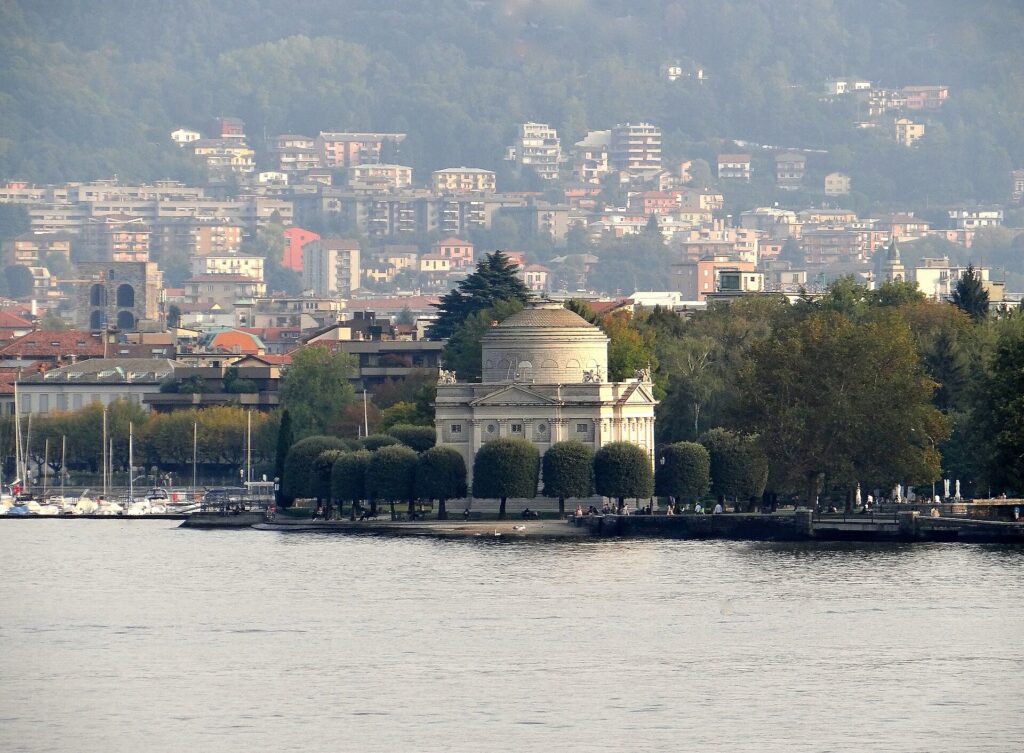
Tempio Voltiano
The Tempio Voltiano is a small neoclassical temple on the lakeshore, crowned by a dome and inspired by the Pantheon, built in 1927 to honor Alessandro Volta and display instruments, documents and memorabilia related to his electrical experiments. Inside, marble floors and refined decorations frame a museum itinerary that tells the story of the Como‑born scientist and the development of electricity through original devices and explanatory panels. Its spectacular position on the promenade, surrounded by water and mountains, makes the temple one of Como’s most recognizable landmarks and a beloved spot for sunset views over the lake.
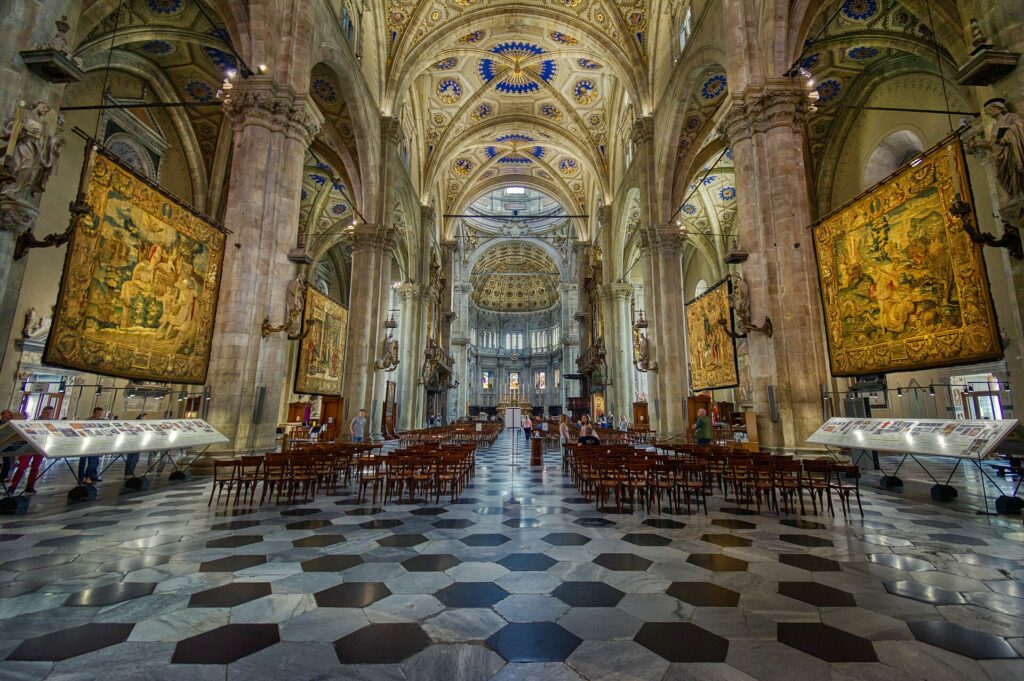
Duomo di Como
Como Cathedral, dedicated to Santa Maria Assunta, is the last great Gothic cathedral built in Lombardy and dominates the historic center with its ornate marble façade and striking dome. Construction began in 1396 and continued into the 18th century, resulting in a harmonious blend of Gothic, Renaissance and Baroque elements, from tall clustered pillars and stained glass to fine tapestries and sculptural work by Tommaso Rodari. Stepping out onto the square, bordered by the medieval Broletto and the civic tower, visitors find themselves in a lively space of cafés and shops where sacred architecture meets everyday life just a short stroll from the lakefront.
Cernobbio
Cernobbio is an elegant village on the western shore of Lake Como, nestled between the water and Monte Bisbino and long renowned as a refined holiday retreat. Its lakefront square, small harbor and historic villas in leafy parks create a relaxed yet sophisticated atmosphere, with easy boat connections to Como and the central lake.
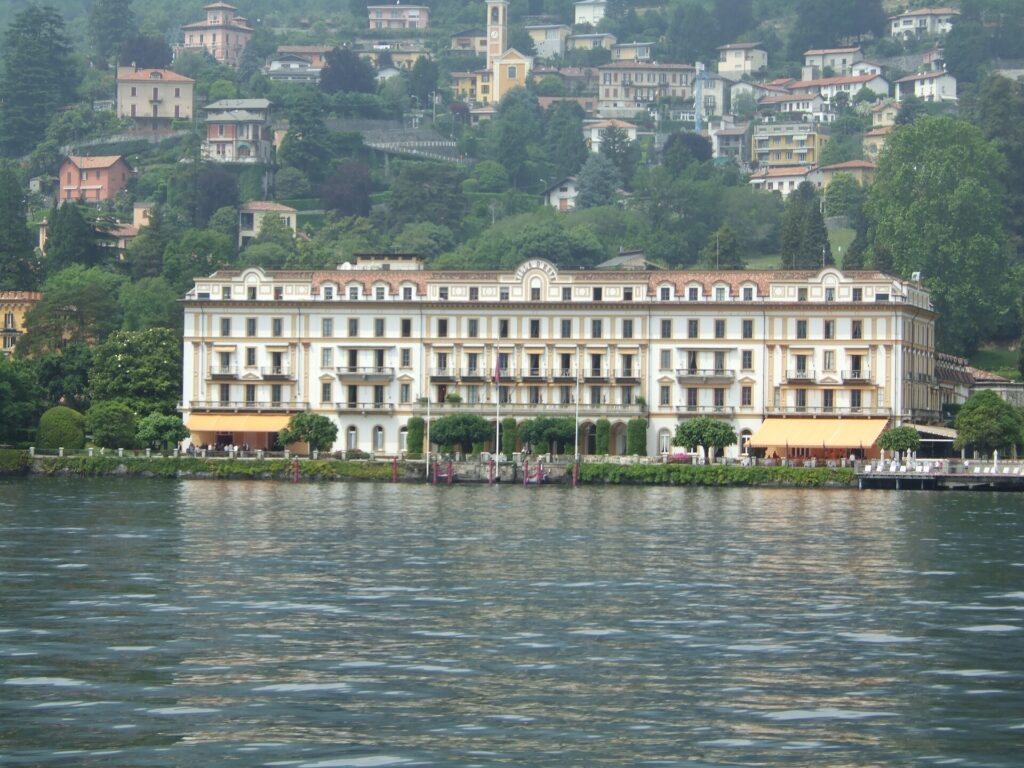
Villa d'Este
Villa d’Este is a 16th‑century residence on the water that has become one of Italy’s most famous luxury hotels, surrounded by around ten hectares of manicured Italian gardens, fountains and terraces. Originally built for Cardinal Tolomeo Gallio, it later hosted nobles and royalty and, from the 19th century onward, became a key stage of cosmopolitan lake tourism, today known worldwide for glamorous events such as the Concorso d’Eleganza for classic cars. The U‑shaped façade facing the lake, the monumental stairways climbing into the park and the long avenues shaded by ancient trees create the feel of a grand court residence, where centuries of history meet the discreet rhythms of an exclusive resort.
Villa Erba
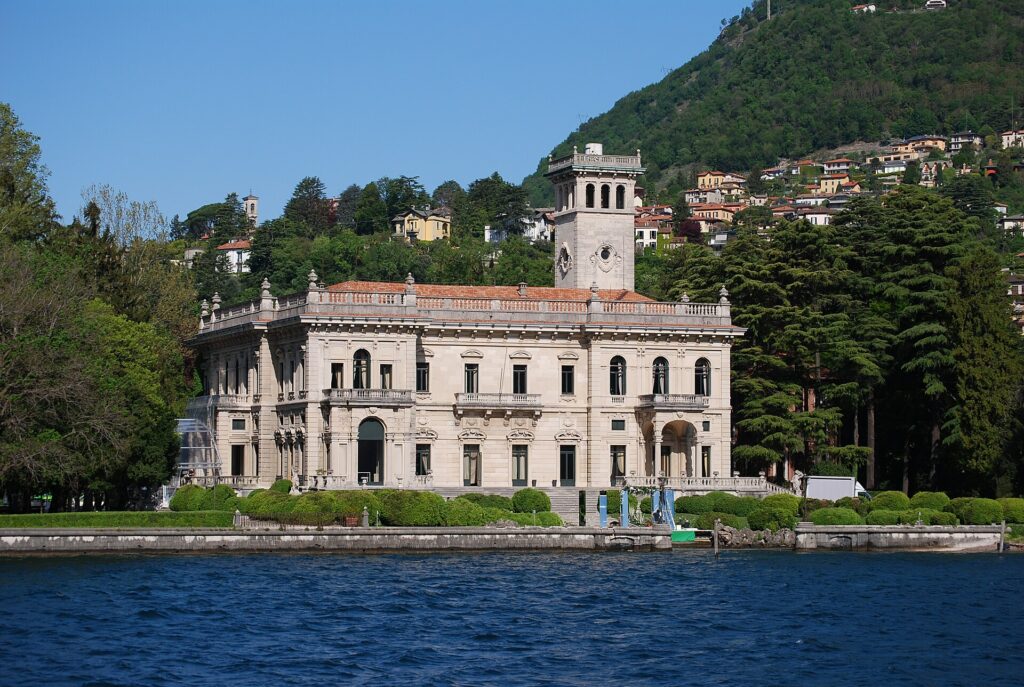
Villa Erba, completed at the end of the 19th century on the site of an earlier monastery, is a sumptuous lakeside villa with a distinctive tower, broad terraces stepping down to the water and a vast flat park dotted with exotic trees. Commissioned by Luigi Erba and designed by architects Angelo Savoldi and Giovanni Battista Borsani, it is a showcase of late‑19th‑century architecture, with richly decorated interiors featuring stucco, frescoes and furnishings that evoke the lifestyle of Milan’s industrial bourgeoisie. Today the complex houses an important exhibition and conference center, yet it has kept the allure of a historic residence thanks to its English‑style gardens, stables, boathouse and refined sculptural details scattered throughout the grounds.
Moltrasio, Carate Urio and Laglio
Moltrasio, Carate Urio and Laglio are three small villages strung along the western shore, in a stretch famed for historic villas, terraced gardens and intimate lake views. Stone houses, narrow alleys and old mule tracks climbing through olive groves give this area a slow, authentic feel, ideal for tranquil walks and boat trips away from the busier central‑lake hubs.
Villa Oleandra
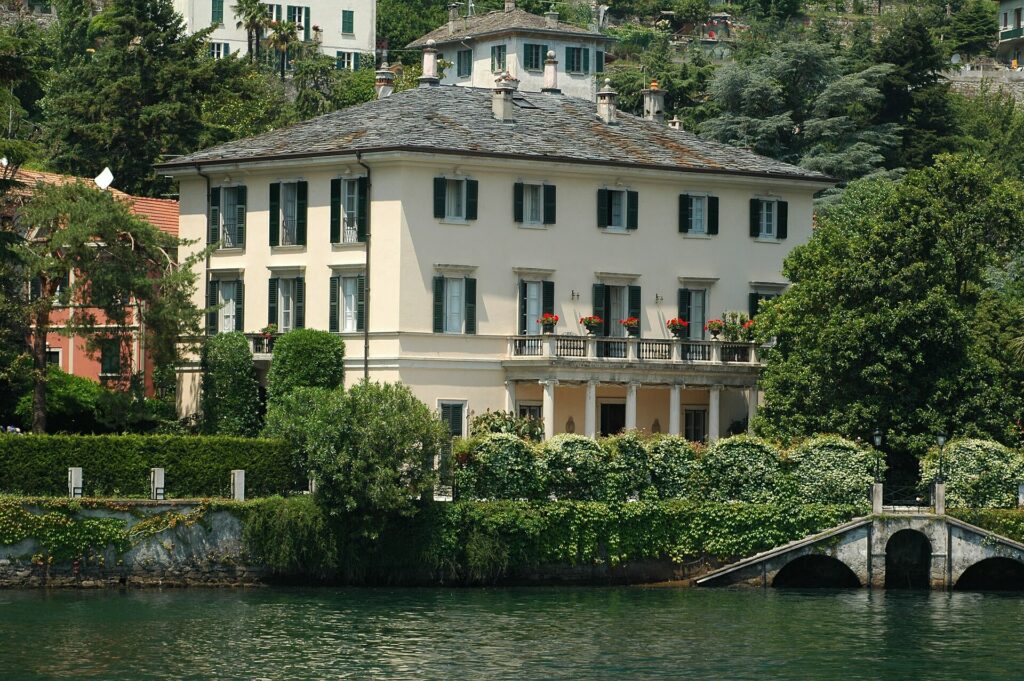
18th‑century Villa Oleandra stands on the waterfront in Laglio and became internationally famous when actor George Clooney purchased it in the early 2000s as his Lake Como residence. The villa, documented on cadastral maps since at least 1720 and passed between several families over the centuries, combines the elegance typical of Lario’s grand homes with a lakeside façade, private dock and lush gardens. Although it is a private property and not open to visitors, its pale‑yellow silhouette and park can be admired from the water, making it a curious and photogenic stop on many boat tours along this stretch of coast.
Villa Fontanelle
Villa Fontanelle is a four‑storey neoclassical villa painted in soft yellow and set directly on the water at Moltrasio, best known as the former home of fashion designer Gianni Versace, who bought and painstakingly restored it in the late 1970s. Built in the first half of the 19th century by eccentric Englishman Lord Charles Currie, the estate is surrounded by several acres of ornamental gardens with cottages, a tennis court, a lakeside promenade and a private mooring, conceived as a stage for refined social life. During the Versace years, lavish interiors, mosaics, statues and personally chosen furnishings turned the villa into an ultra‑exclusive retreat frequented by international stars and royalty, adding to its almost mythical reputation on the lake.
Varenna
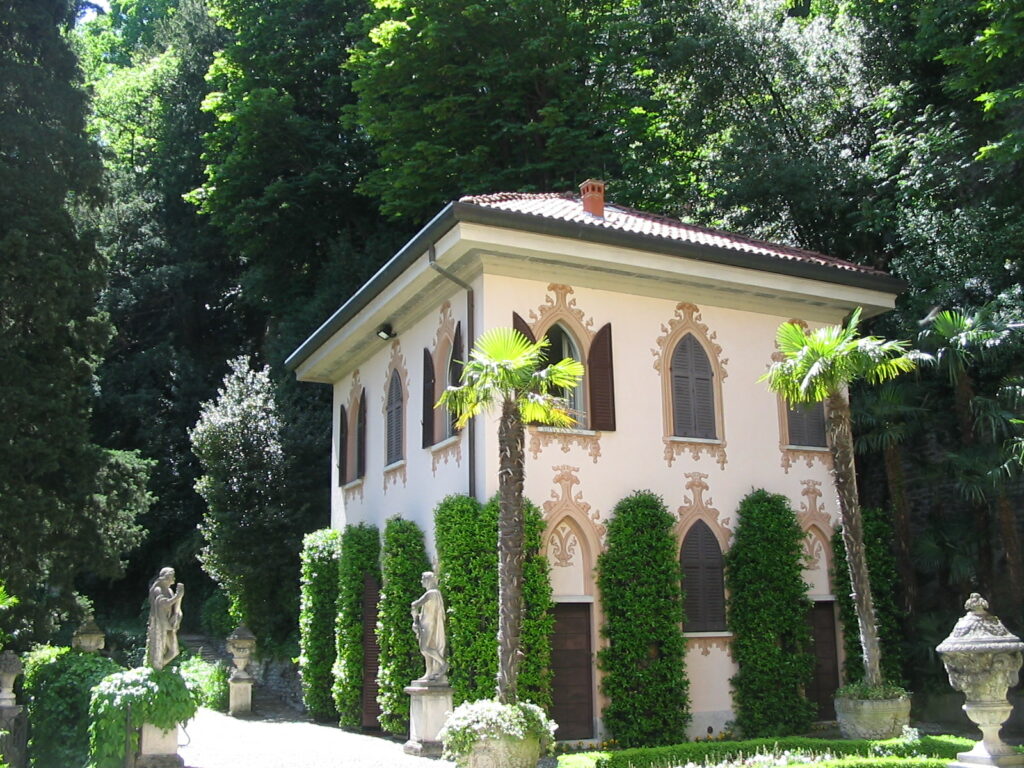
Varenna is an ancient fishing village on the eastern shore, famous for its pastel houses tumbling down towards the water, cobbled lanes and the romantic “Lovers’ Walk” along the lakefront. With prehistoric origins and a medieval past tied to nearby Isola Comacina, it is now considered one of the lake’s most romantic spots, perfect for slow wandering between churches, cafés and the ferry pier linking it to Bellagio and Menaggio.
Villa Monastero
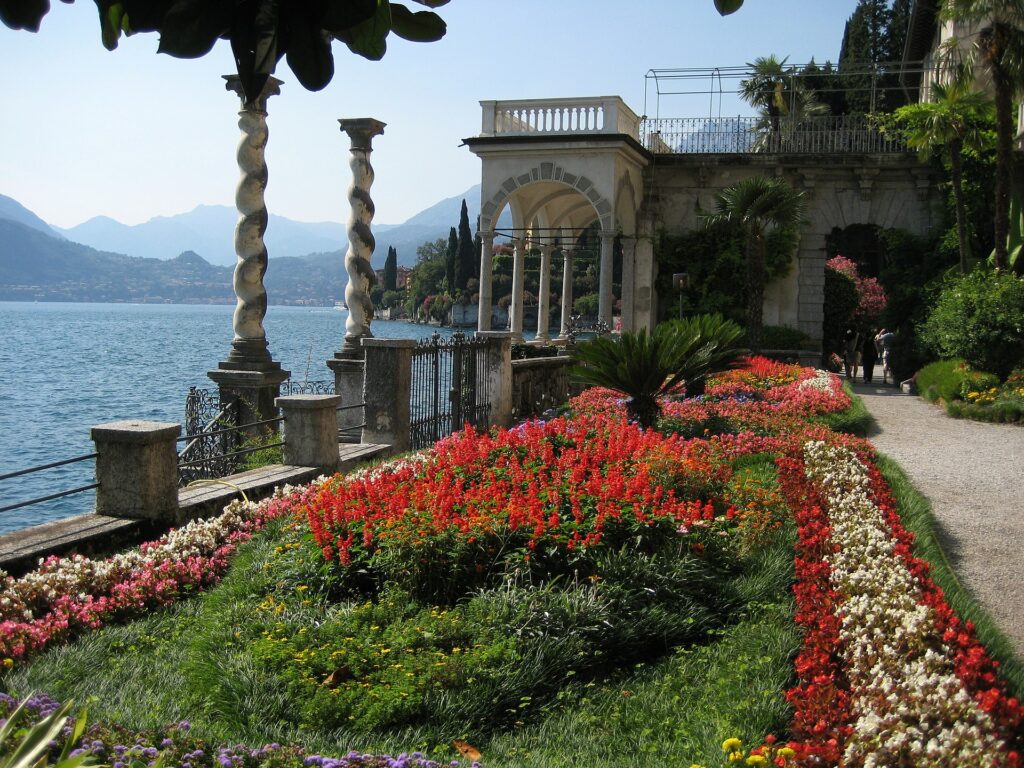
Villa Monastero stretches for almost two kilometers along the Varenna shoreline, its botanical garden unfolding in terraces, pergolas and stairways planted with Mediterranean and exotic species down to the water. Founded on the site of a 12th‑century Cistercian nunnery, it later became a noble residence and today hosts both a historic house museum with fully furnished rooms and a conference center that welcomes high‑level scientific meetings, including the “Enrico Fermi” school of physics. Walking among cypresses, citrus trees and marble statues with constant glimpses of the lake, visitors experience a refined and contemplative atmosphere where time seems dictated only by the sound of waves and wind in the foliage.
Castello di Vezio
Castello di Vezio, with its square tower and crenellated walls, stands on a rocky spur high above Varenna and offers one of the most spectacular panoramic views over the central lake and surrounding mountains. Of medieval origin and once part of a wider signaling system around the Lario, the fortress still dominates an ancient network of paths linking the village to the ridge and nearby hamlets. From the top, reached via trails through olive groves and dry‑stone walls, the eye can embrace at once the Lecco and Como branches and the Bellagio promontory that separates them.
Tremezzo
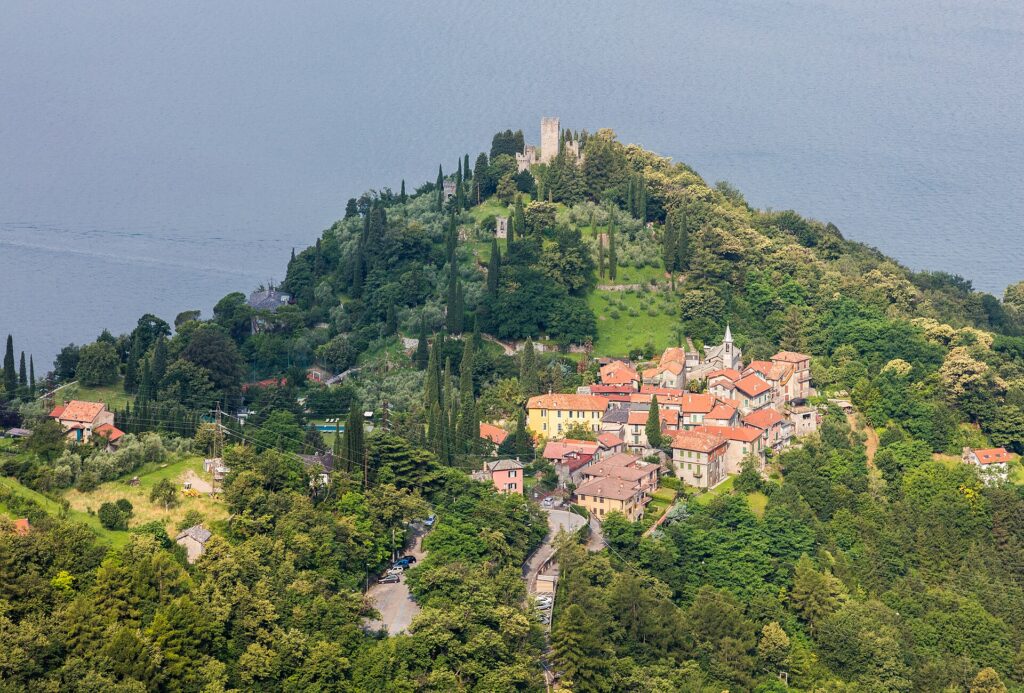
Tremezzo, now part of the municipality of Tremezzina, stretches along the western shore opposite Bellagio and is known for its grand villas, historic hotels and mild climate that favors lush, almost Mediterranean gardens. The main lakeside road runs beside Liberty‑style façades, little pebble beaches and small piers, while behind, the slopes rise quickly toward panoramic hamlets and Monte Crocione, blending aristocratic resort life with pre‑Alpine nature.
Villa Carlotta
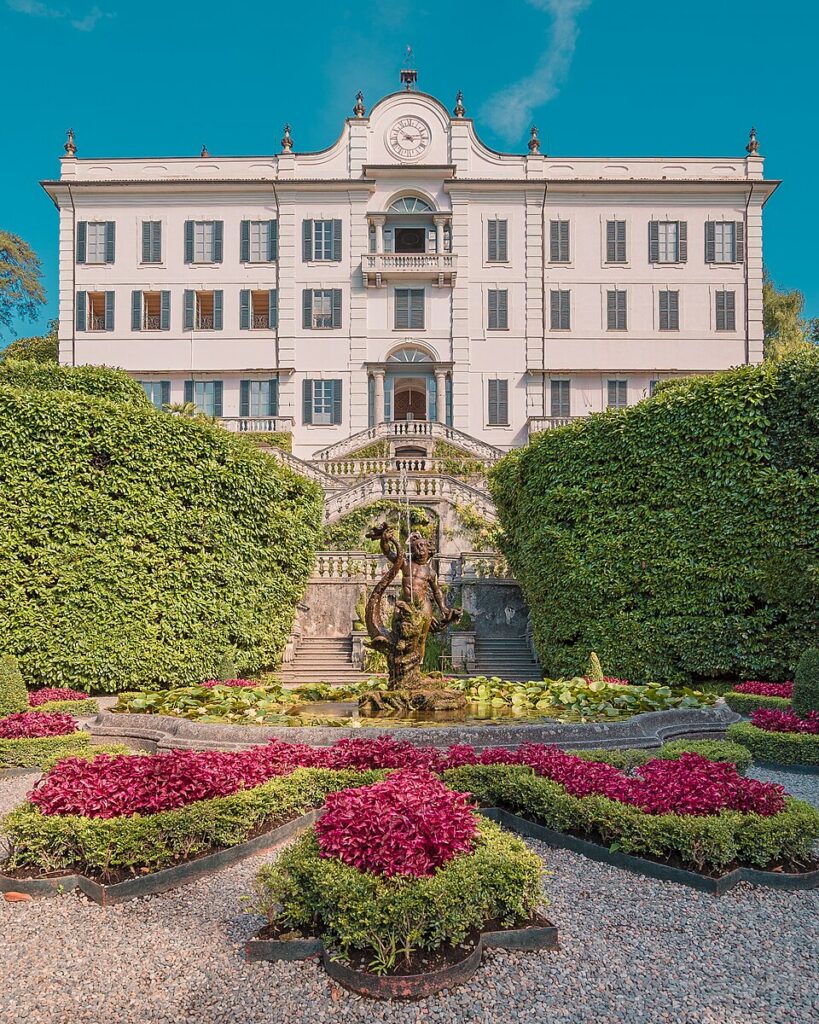
Villa Carlotta is one of Lake Como’s most famous villas, perfectly combining art and botany: inside are works by masters such as Canova, Thorvaldsen and Hayez, while outside a vast park descends towards the water with formal and landscape gardens. Built in the late 17th century for Marquis Giorgio Clerici and later transformed by Count Sommariva into a veritable temple of 19th‑century art, it eventually became the residence of Princess Carlotta and her husband, Duke George II of Saxe‑Meiningen, a keen botanist who greatly enriched the plant collections. In spring more than 150 varieties of azaleas and rhododendrons explode in color among sequoias, camellias, cedars and themed sections, offering changing views and open vistas towards Bellagio and the Alpine peaks in every season.
Grand Hotel Tremezzo
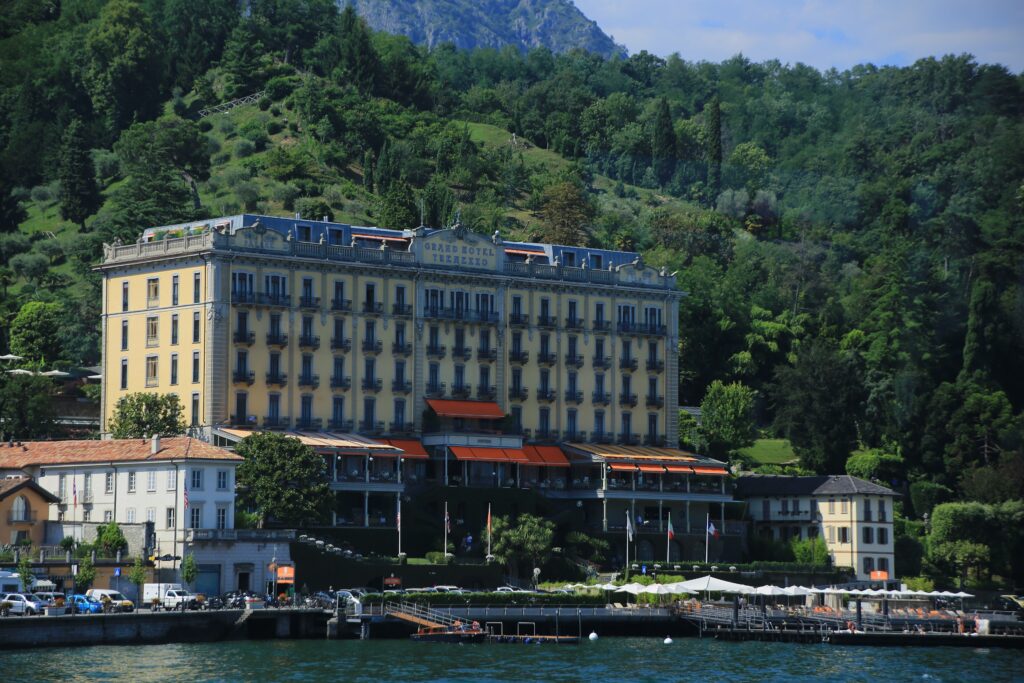
The Grand Hotel Tremezzo is a historic Art Nouveau hotel opened in 1910, widely regarded as one of Italy’s most iconic lakeside properties, with its honey‑colored façade facing the water and steep gardens climbing behind. Created to host the international clientele of the Belle Époque, it still blends original stucco work, ballrooms and period furnishings with contemporary comforts, a panoramic spa and pools suspended between the lake and flower‑filled terraces. From its rooms and rooftop viewpoints guests enjoy privileged vistas over Bellagio, Villa Carlotta and the surrounding mountains, turning each stay into a cinematic experience.
Bellaggio
Bellagio sits on the scenic headland that splits Lake Como into its Como and Lecco branches and has long been considered one of Europe’s most refined holiday destinations. The village climbs from the shore in a maze of stepped lanes, arcades, boutiques and restaurants, while along the waterfront stand historic hotels, gardens and piers from which boats fan out across the central lake.
Villa Melzi
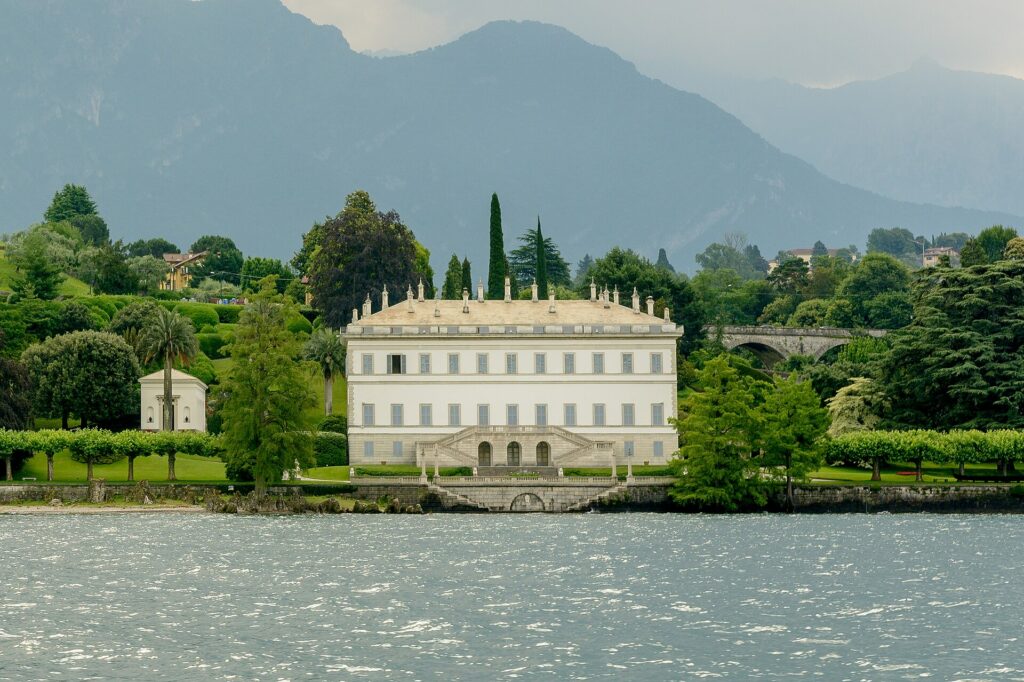
Villa Melzi d’Eril is a neoclassical residence just outside Bellagio’s center, built between 1808 and 1810 for Duke Francesco Melzi d’Eril, an important statesman and vice president of Napoleon’s Italian Republic. Its park, designed by Luigi Canonica with botanist Luigi Villoresi, slopes gently from the lakeshore up to the hillside, alternating broad lawns, azalea and rhododendron groups, classical statues, a romantic Japanese‑style pond and carefully framed views of the luminous white villa above the water. The visit also includes the family chapel and a small museum, making the estate a sophisticated dialogue between architecture, horticulture and art that has earned the gardens national monument status.
Villa Serbelloni
Villa Serbelloni crowns the Bellagio promontory with an extensive park, today owned by the Rockefeller Foundation and home to the Bellagio Center, which hosts residencies for scholars and artists from around the world. Accessible only on guided tours, the grounds are crossed by a network of paths that wind through woodland, terraces and Italian‑style gardens to viewpoints where the two branches of the lake and the encircling mountains unfold in a dramatic panorama. Among hedges, tree‑lined avenues and sudden openings onto the blue surface of the Lario, visitors can still sense the atmosphere of an aristocratic estate transformed into an international laboratory of ideas and creativity.
Villa del Balbianello
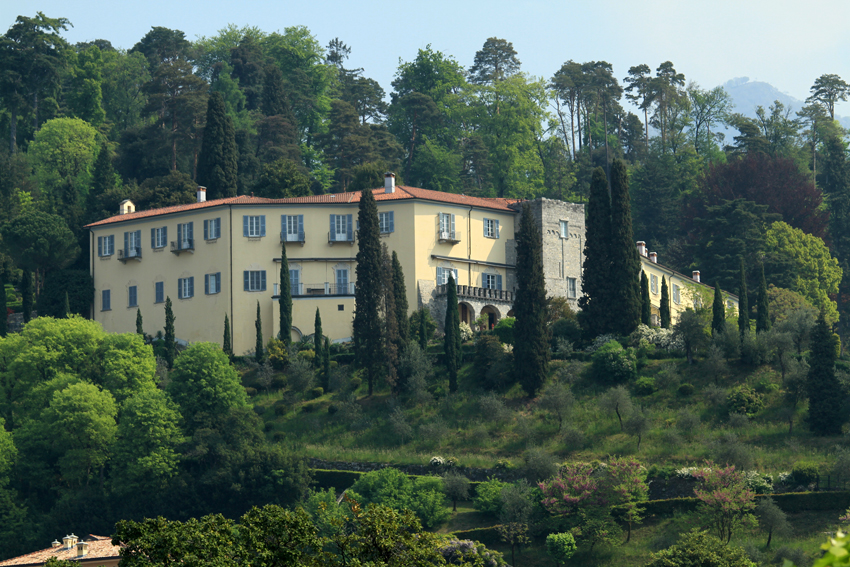
Villa del Balbianello stands on the wooded tip of the Lavedo promontory at Lenno, appearing like a suspended stage between sky and water with terraces, loggias and stairways tumbling down toward the lake. Built at the end of the 18th century by Cardinal Angelo Maria Durini on the site of a former Franciscan monastery, it later became a meeting place for intellectuals and, in the 20th century, the home of explorer Guido Monzino, who left the property and his collections to the Italian heritage fund FAI. Today the villa is renowned worldwide for its sculpted gardens, sweeping views over the central lake and appearances in major films, and can be reached either via a forest path or, more scenically, by boat.
Isola Comacina
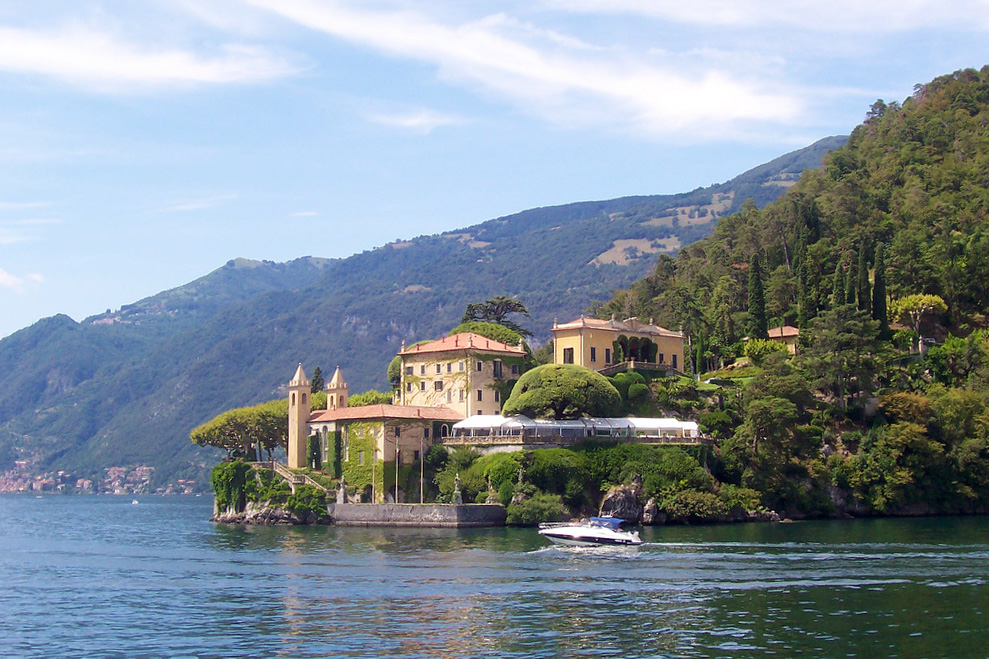
Isola Comacina is the only island on Lake Como, a small strip of land about 600 meters long facing Ossuccio, in a sheltered basin with a particularly mild microclimate where olive trees thrive. Inhabited since antiquity and a key stronghold in the early Middle Ages, it preserves a rich archaeological palimpsest including the remains of Romanesque churches, a basilica with crypt, early Christian structures and fortifications unearthed by 20th‑century excavations. Today the island is a haven of quiet reached by small boats, inviting visitors to stroll among ruins, grassy clearings and the little church of San Giovanni, coming alive each June with the evocative San Giovanni festival and fireworks over the lake.
Nesso
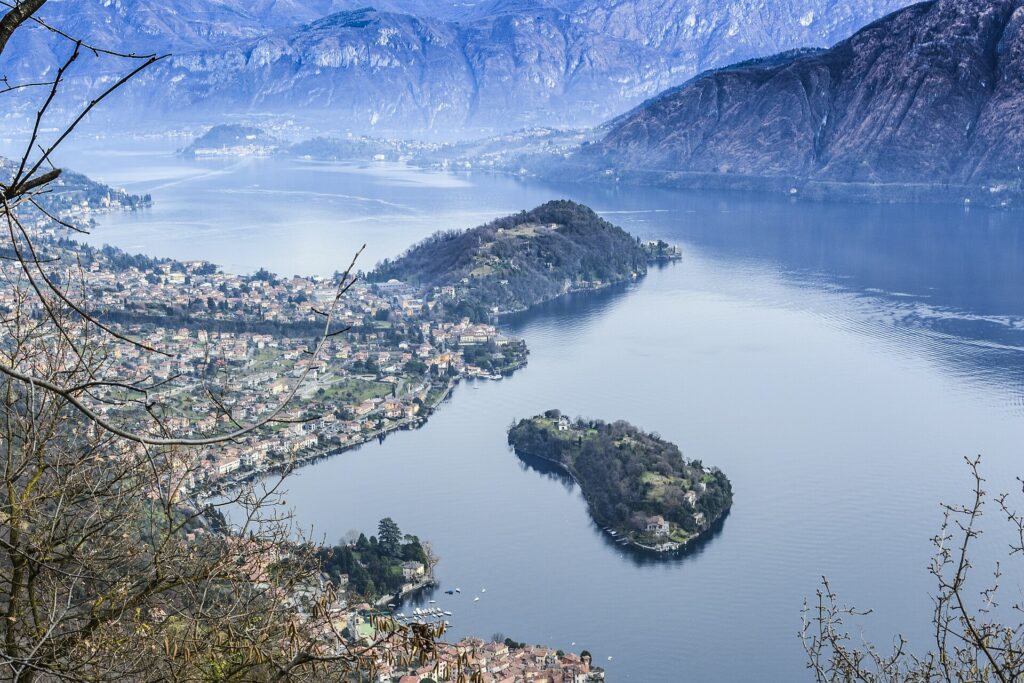
Nesso is a compact village on the eastern shore, halfway between Como and Bellagio, famous for the dramatic gorge that cleaves the settlement in two and for its plunging waterfall. Here the Tuf and Nosee streams combine in a drop of over 200 meters, carving a deep chasm through the rock over the centuries, best admired from the stone Civera Bridge reached via a long stairway that descends between colorful houses to the lake. Narrow alleys, stepped lanes and sudden viewpoints between cliffs and water preserve an authentic, slightly mysterious atmosphere, enhanced by the constant roar of the falls echoing through the village.
Orrido di Nesso
The Orrido di Nesso waterfall is the scenic heart of the village: the converging streams rush into the narrow gorge and tumble toward the lake, creating spray, mist and shifting light effects that change with the seasons and viewing angle. From the Civera Bridge, an arched stone span joining the two halves of Nesso, visitors enjoy one of Lake Como’s most iconic vistas, with the bridge in the foreground, houses clinging to the rock and the white cascade thundering behind. Approaching from the lake by boat or kayak reveals the raw power of this natural canyon, which once drove mills and workshops and is now a favorite set for photographers, swimmers and hikers seeking a wilder side of the Lario.
Blevio & Torno
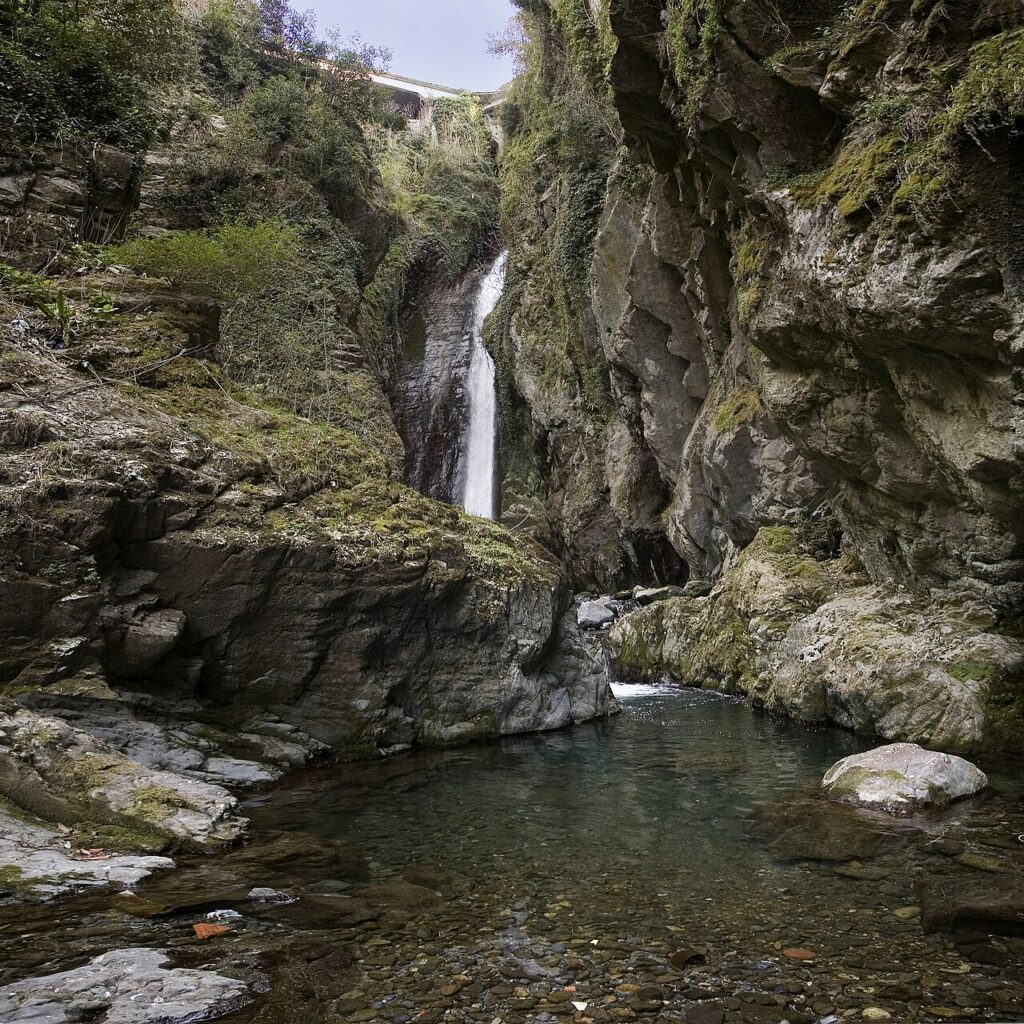
Blevio is a small commune on the eastern shore between Como and Torno, known as the “municipality of the seven towns” for its seven hamlets that climb steeply from the lake up the slopes of Monte Boletto, each with far‑reaching views over Cernobbio, Moltrasio and the opposite shore. Torno, just to the north on the same side, shares this intimate mix of stone alleys, old churches and terraced olive groves and serves as a starting point for panoramic mule tracks and hiking trails that connect lakeside villages with the pre‑Alpine hinterland.
Villa Troubetzkoy
Villa Troubetzkoy in Blevio was built in the mid‑19th century by Russian prince Alexander Troubetzkoy and stands out as one of the most distinctive residences on the lake. The property is notable for its external elevator, an ingenious vertical link between the lakeside level and the main road above, underlining the steep topography that characterizes this shore. Surrounded by gardens and woodland, the villa has over time hosted aristocrats, artists and prominent cultural figures, reinforcing its reputation as a discreet yet spectacular refuge on Lake Como.
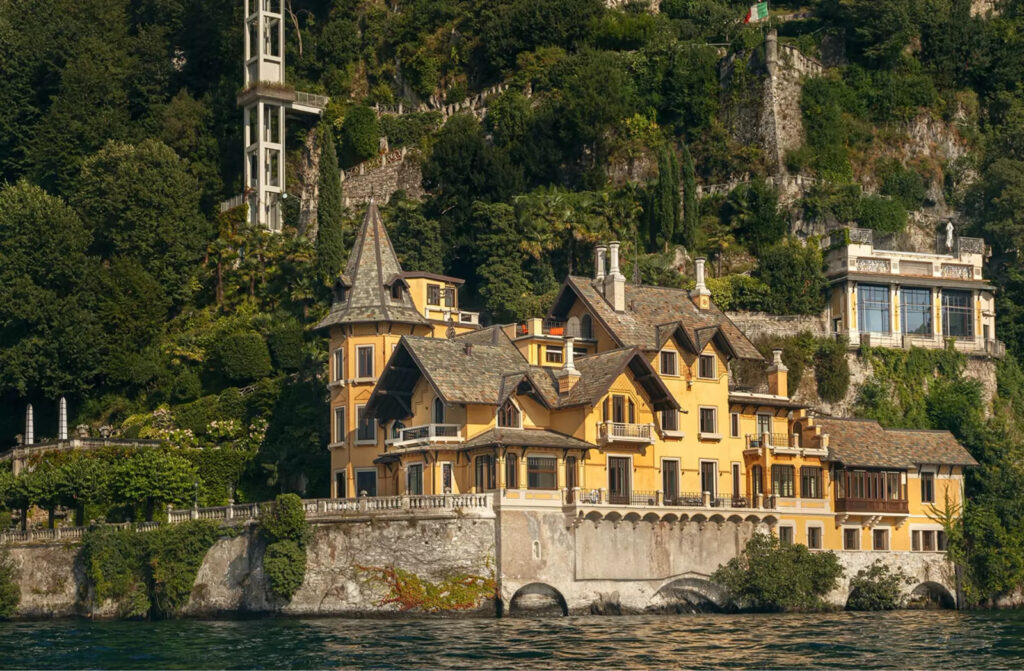
Mandarin Oriental Hotel Villa
The Mandarin Oriental, Lago di Como, created within a historic estate in Blevio, is a luxury resort tucked between the lush hillside and the deep blue of the lake, with rooms, suites and private villas enjoying sweeping water views. It combines the architectural elegance of the original villa with contemporary interiors, a large panoramic spa, pools and terraced gardens leading down to a private dock, forming a serene hideaway just minutes from Como. Fine‑dining experiences, tailored lake activities and highly personalized service round out the sense of an exclusive sanctuary, making it one of the most sought‑after properties on the lake’s eastern shore.
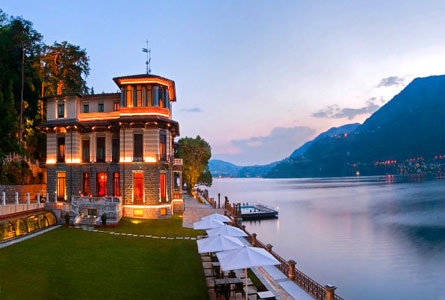
Villa Pliniana
Villa Pliniana, set between Blevio and Torno, is one of Lake Como’s oldest and most atmospheric residences, erected in the 16th century around a famous intermittent spring described by Pliny the Younger and later studied by Leonardo da Vinci. The villa clings directly to the rock above the water, wrapped around an inner courtyard where the spring still rises, creating an otherworldly atmosphere where Renaissance architecture and natural wonder intertwine. Over the centuries it has welcomed writers, musicians, scientists and rulers, and after a meticulous restoration it now serves as an ultra‑exclusive retreat, with gardens, boathouse, helipad and historic salons brought back to their former splendor.
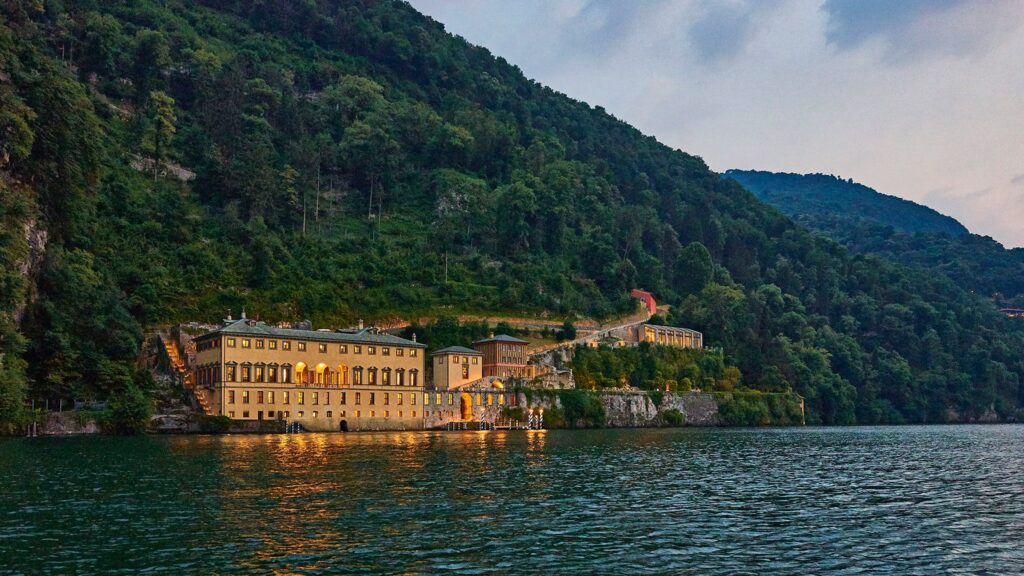
Based in Como, we design exclusive private experiences on Lake Como, capturing the timeless elegance of Italy’s Dolce Vita.
Explore the website
Contact us
registered office - Piazza del Popolo 1, 22100 Como
Lake Como Tourism
boat charters & experiences
P.IVA 04213480132
© 2025 LAKE COMO TOURISM ALL RIGHTS RESERVED